
Why That Noise Won't Wait Until Spring
A garage door that's making noise in November is a garage door that's about to get worse. Cold temperatures thicken lubricant, stiffen metal, and make hardware more brittle. Road salt tracked in from driveways accelerates rust on springs, hinges, and tracks. A rattle you can live with in October becomes a spring that snaps in January, or an opener gear that strips on the coldest morning of the year — usually right when you're already late for work. Ignoring garage door noise for another season doesn't just risk a bigger repair bill; it risks a door that won't open at all during a cold snap, or one that comes down hard with nothing to catch it. Here's how to tell which noise you're dealing with, and what actually needs to happen to fix it.
Grinding: Metal Fighting Metal
Grinding usually sounds like something is struggling to turn or slide. A technician checks the rollers first, since worn nylon rollers or dry metal rollers grinding against the track is the most common cause. Next comes the roller bearings — once they wear out, the roller wobbles and grinds even if the wheel itself looks fine. If the rollers check out, the opener's gear is the next suspect; a stripped or worn drive gear inside the motor housing will grind under load, especially on older chain-drive openers working harder in the cold.
- Worn rollers: replacement is straightforward and often done in pairs or as a full set, typically a few hundred dollars depending on roller type.
- Failed bearings: usually replaced along with the roller rather than separately.
- Stripped opener gear: requires opening the motor housing; on older units this is often the point where replacing the opener outright makes more financial sense than repairing it.
Squealing: Almost Always Friction
Squealing is friction asking for lubrication. The first thing a technician checks is when the door was last lubricated — in this climate, factory grease on rollers and hinges thins out and washes away faster than people expect, especially with winter slush dripping off the car. If a fresh coat of garage-door-specific lubricant doesn't quiet things down, the hinges get checked next for wear at the pivot points, which causes metal-on-metal squeal even with lubricant present. If the squeal is isolated to one spot on the track rather than happening throughout the door's travel, that points to a bent section of track catching the rollers as they pass.
- Dry hardware: a proper lubrication service takes care of this in under an hour and should be part of routine maintenance, ideally before winter sets in, not during it.
- Worn hinges: replaced individually as they fail; cheap to do one at a time, more involved if several go at once.
- Bent track: requires realigning or replacing the affected section — left alone, it accelerates roller wear and can eventually cause the door to bind.
Popping: Something Under Tension
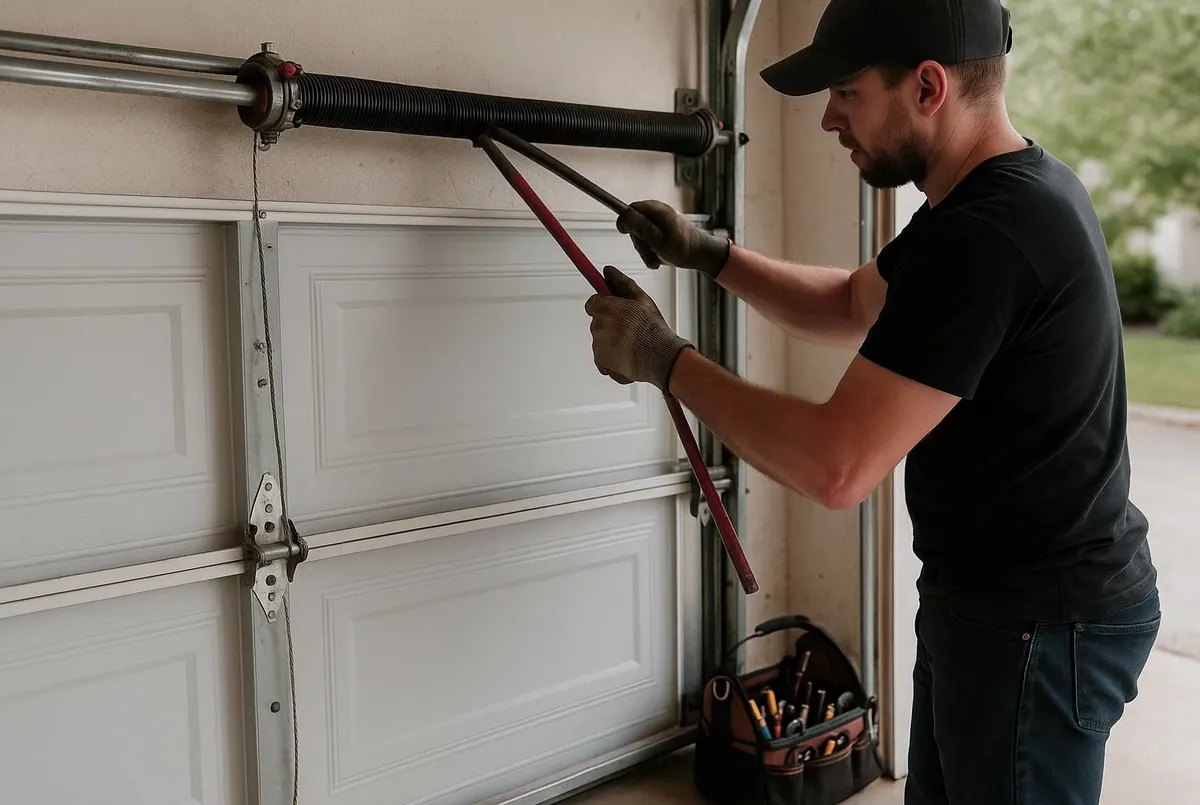
Popping is the noise to take most seriously, because it often means a spring. Technicians check spring tension first — a torsion spring that's losing tension or developing a hairline crack will pop or bang as it shifts under load, particularly as cold weather makes the metal more brittle. If the springs look sound, the next check is the door panels themselves; older or lower-quality panels can pop and flex audibly as they flex with temperature swings, especially on the coldest days. Last on the list is track alignment — a misaligned track can cause the door to catch and release with a popping sound as it travels.
- Spring wear or damage: springs are under extreme tension and should only be handled by a trained technician. Replacement typically falls in the low-to-mid hundreds depending on spring type and door size.
- Panel flex: may just need reinforcement hardware, or may signal it's time to discuss insulated panels given how much temperature swings stress an uninsulated door.
- Track misalignment: usually a straightforward adjustment once identified.
Rattling: Loose Before It's Broken
Rattling is usually the easiest fix and the easiest to catch early. The first check is fasteners — bolts and screws on the track, hinges, and opener rail loosen over time from vibration and temperature changes, and a simple tightening pass often solves it. If hardware is tight, worn hinges are checked next, since play in the hinge joint lets the door rattle as it moves. Finally, the opener's chain or belt gets inspected; a loose chain-drive opener will rattle audibly, and this tends to show up more in winter as metal contracts in the cold.
- Loose fasteners: a 20-30 minute fix during a routine inspection.
- Worn hinges: replaced as needed, same as above.
- Loose chain or belt: adjusted per the opener's specifications; a quick fix that prevents bigger wear on the motor over time.
When to Call Franklin Garage Door Experts
If you can't tell which noise you're hearing, or you've already tried lubricating and tightening without luck, it's time for a proper diagnosis. Franklin Garage Door Experts can run a full Garage Door Maintenance check to catch worn rollers, loose hardware, and spring wear before winter forces the issue, and they handle Garage Door Spring Replacement safely when tension components need to go. For homeowners in Franklin, Oak Creek, Greendale, Hales Corners, Muskego, New Berlin, Greenfield, and Cudahy, getting ahead of a noisy door now is a lot cheaper than dealing with a dead one during a January cold snap.
Hearing something off? Call Franklin Garage Door Experts today and get it checked before winter makes the decision for you.